 Poundon Pastures
Finding a truly secure dog field in Oxfordshire and Buckinghamshire
By Catherine,
You might want somewhere to settle in a rescue dog, manage a breed with a strong urge to chase wildlife, or work on recall. A private field can be a good answer when public parks are too stressful, but they're not all built to the same standard. Here's what to look for.
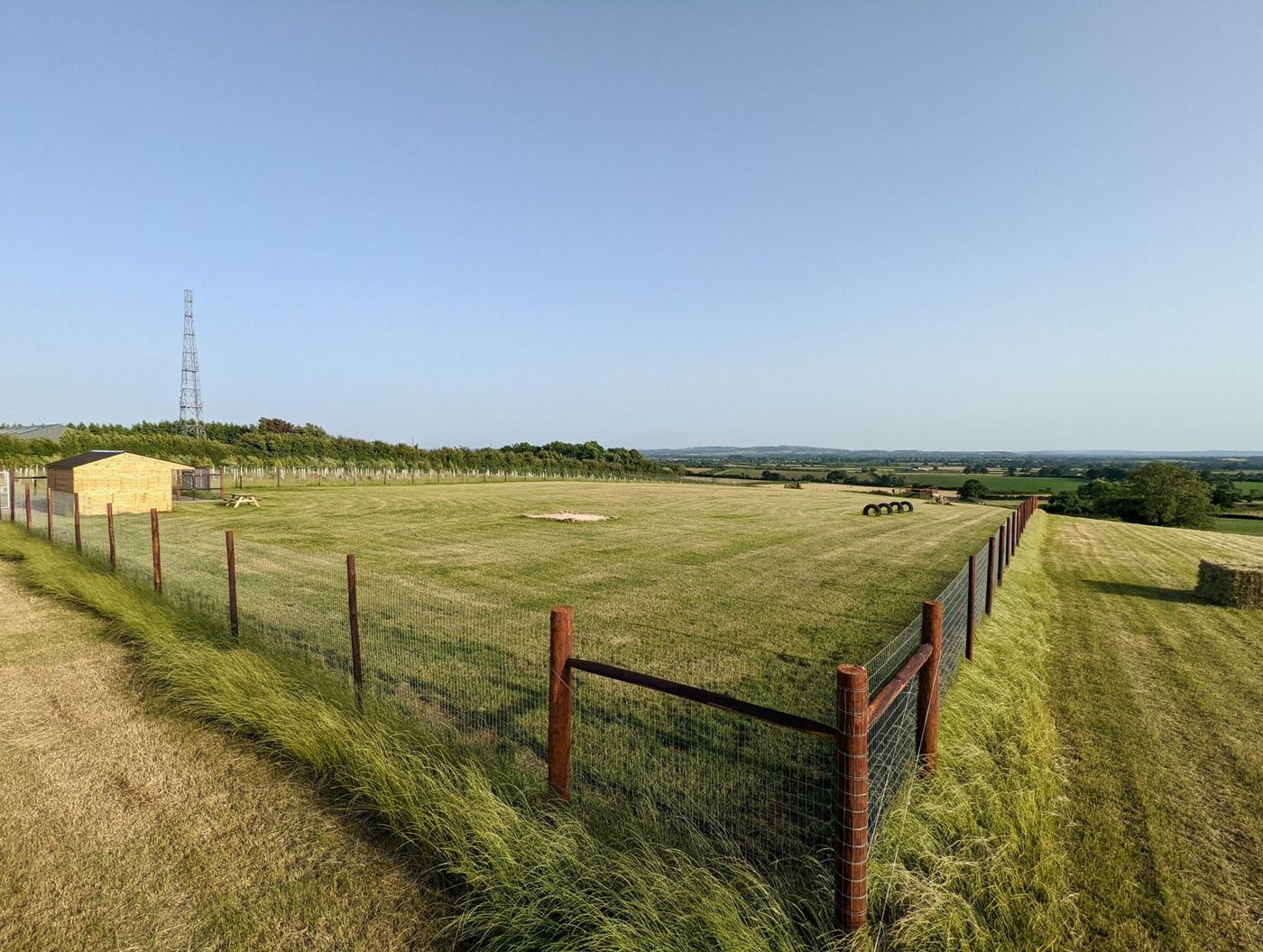
Start with the fence. A basic one often isn't enough for a determined or athletic dog, because many can jump standard agricultural fencing. Look for at least two metres. Dogs dig too, especially when they smell something small, so the fence should be dug in. The gate is the usual weak spot. A good field has a double-gate airlock, so you drive fully inside, close the first gate, and only then let your dog out of the car.
Then the space itself. A flat, empty paddock can set off frantic, repetitive running, which adds stress instead of easing it. The better fields have varied ground, such as earth mounds, log piles and scent areas. These encourage sniffing and foraging, which can lower a dog's heart rate and help them settle.
Finally, privacy. Nervous or reactive dogs can react just to seeing other dogs or people in the distance, so look for thick hedges or windbreaks around the boundary. Check the booking system leaves gaps between sessions, so you don't meet anyone in the car park.
See also: dog field near Bicester and our 10-session packages.
Want a calm, private place to try this with your dog?
Book your session