 Poundon Pastures
Secure fields for sighthounds: what lurchers, greyhounds and whippets actually need
By Catherine,
Lurchers, greyhounds, whippets and salukis can hit 30 to 40mph within a few strides. They were bred to spot movement and go, and once something catches their eye, many stop listening. Poor recall in a sighthound is usually breeding, not bad training, and no amount of treats fixes a dog mid-chase.
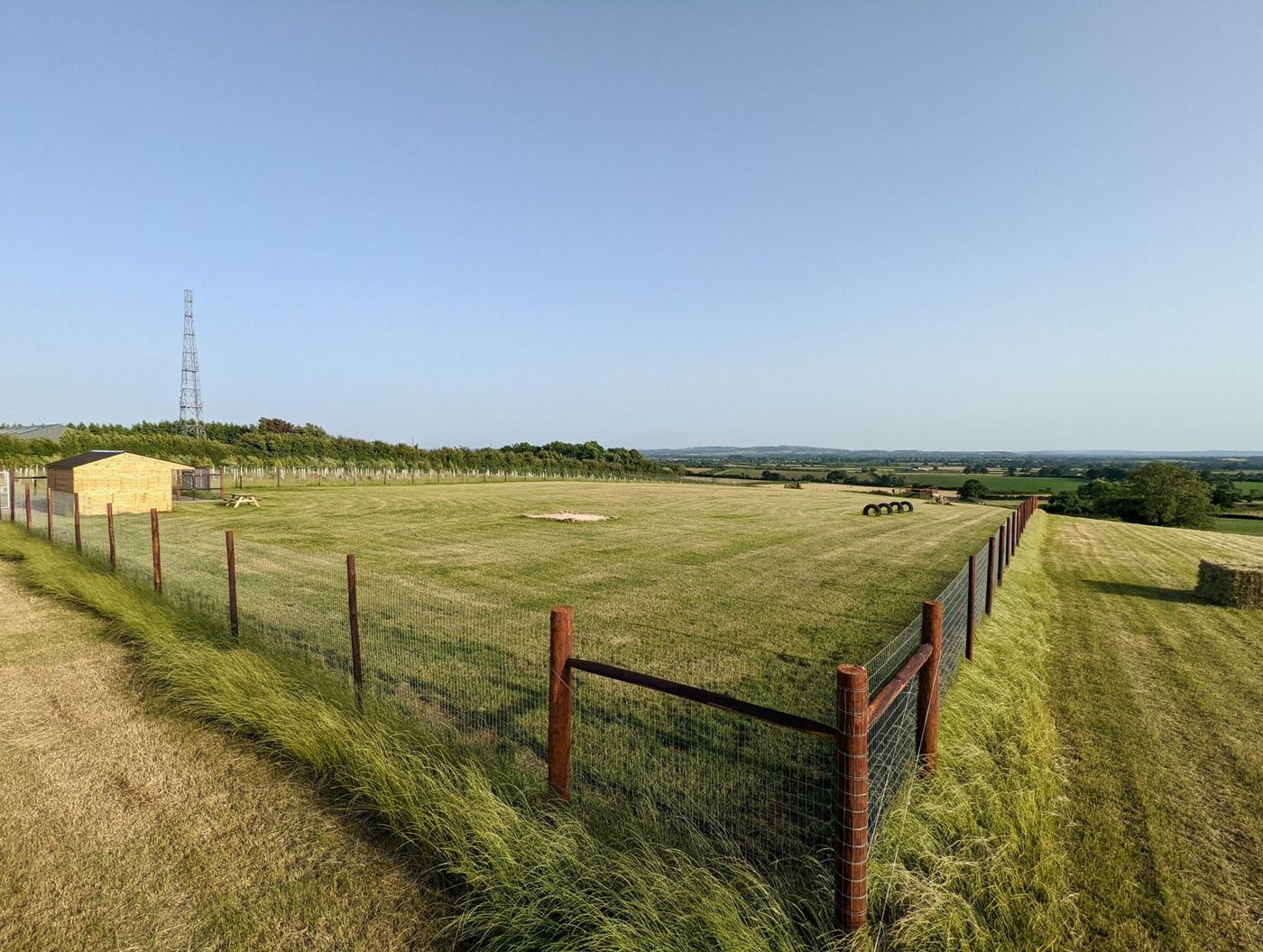
Fencing matters more for them than for most dogs. They can clear fences that stop other breeds, and a lurcher's narrow head means a gap that looks too small may not be. Six-foot fencing with no low gaps is the minimum. Open space lets them run, but it also lets them spot wildlife over the boundary, so trees, a shelter or a change in the ground give them somewhere to settle between sprints.
Ex-racing greyhounds need a little extra thought. They were bred to run flat out, but after retirement most are kept on the lead, so plenty walk nicely and never get to run. Recall is brand new to them, because racing only ever asks them to chase forwards. Expect it to take months, and practise somewhere secure. A calm greyhound may be shut down rather than relaxed after long stretches in a crate, so don't take quiet to mean ready for more freedom. They feel the cold too. Pack a coat for a British winter, even for active sessions.
What helps is short, low-pressure sessions in a fully secure space, introduced gradually, with no public recall tests until recall is reliable. A muzzle for early sessions is sensible and not a sign anything is wrong. Many greyhounds have worn one since puppyhood and find it familiar.
See also: secure dog field for reactive dogs, dog field near Bicester and our 10-session packages.
Want a calm, private place to try this with your dog?
Book your session